
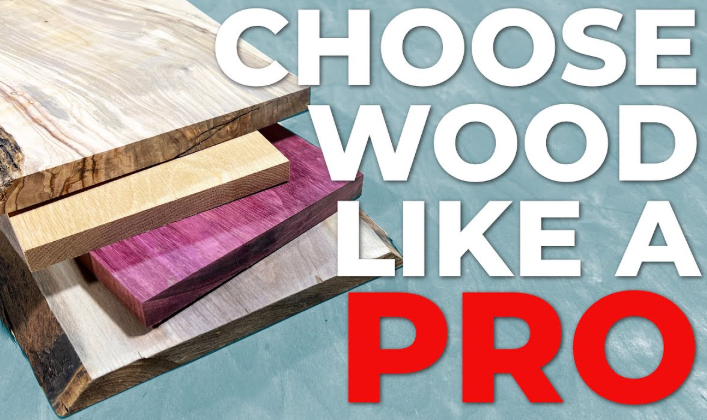
How to Choose the Right Wood for Your Next Project
Master the art of selecting wood for any project. Learn about hardwoods vs. softwoods, grain patterns, and moisture content to ensure your furniture lasts.
Choosing the right species of wood is arguably the most critical decision a woodworker makes. It doesn’t matter how precise your dovetails are or how expensive your table saw is; if you pick a wood that is prone to warping or isn’t suited for the environment, your project is destined for trouble.
For beginners, walking into a lumberyard can be overwhelming. You are faced with racks of boards labeled with terms like "4/4," "S2S," and "kiln-dried," alongside a dozen different species ranging from pale pine to deep, chocolatey walnut. This guide will walk you through everything you need to know to make an informed choice for your next masterpiece.
Understanding the Primary Divide: Hardwoods vs. Softwoods
The most common misconception in woodworking is that "hardwood" is always hard and "softwood" is always soft. In reality, this classification is botanical.
Hardwoods (Deciduous Trees)
Hardwoods come from angiosperm trees—those that lose their leaves annually and produce seeds with a covering (like acorns or fruit). Common examples include Oak, Walnut, Maple, and Cherry. While many are indeed dense and durable, some, like Balsa wood, are incredibly soft. For furniture that needs to withstand daily wear and tear, hardwoods are generally the gold standard.
Softwoods (Coniferous Trees)
Softwoods come from gymnosperms, or needle-bearing evergreen trees. Think Pine, Cedar, Fir, and Spruce. These trees grow much faster than hardwoods, making them more affordable and sustainable. They are fantastic for structural work, outdoor projects, or rustic indoor furniture, but they do dent easily under pressure.
Choosing Wood Based on Project Type
Where will your project live, and what will it do? Your answer dictates the wood you should buy.
Indoor Furniture
For dining tables, chairs, and cabinets, you want stability and aesthetics.
- White Oak: Extremely durable and timeless.
- Black Walnut: Premium look with beautiful dark tones.
- Cherry: Easy to work with and develops a rich patina over time.
Outdoor Projects
Outdoor wood must resist rot and insect attacks.
- Western Red Cedar: Naturally resistant to decay and lightweight.
- Teak: The "king" of outdoor wood due to its high oil content, though it is expensive.
- White Oak: Unlike Red Oak, White Oak has closed cellular structures (tyloses) that make it water-resistant.
Utility and Shop Projects
For workbenches or jigs, focus on cost and stability rather than beauty.
- Pine or Douglas Fir: Cheap and readily available at big-box stores.
- Baltic Birch Plywood: Superior stability for shop fixtures.
Evaluating Wood Grain and Appearance
The "figure" of the wood—its visual pattern—is what gives your project character. When selecting boards, look at how the wood was cut:
- Plain Sawn: The most common and affordable cut. It produces a "cathedral" grain pattern. However, it is the most prone to cupping and twisting.
- Quarter Sawn: The log is cut at a 90-degree angle to the growth rings. This results in straight, vertical grain lines and exceptional stability. In White Oak, it reveals beautiful "ray flecks."
- Rift Sawn: Provides the most linear grain possible, often used for chair legs where a uniform look is desired on all four sides.
The Importance of Moisture Content
Wood is a hygroscopic material; it breathes, expanding and contracting with changes in humidity. If you build a tabletop with "green" (wet) wood and bring it into a climate-controlled home, it will likely crack or warp as it dries.
- Air-Dried Wood: Usually has a moisture content (MC) of 12-20%. It’s great for outdoor projects.
- Kiln-Dried Wood: Dried in a controlled oven to reach 6-8% MC. This is what you should use for indoor furniture to minimize movement.
Pro Tip: Always let your lumber "acclimate" to your shop for at least 7-14 days before you start milling.
Common Mistakes to Avoid at the Lumberyard
Even if you’ve picked the right species, a bad board is a bad board. Watch out for:
- Bow and Twist: Sight down the edge of the board like a rifle. If it looks like a banana or a propeller, put it back.
- Checking: Small cracks at the ends of the boards. You'll likely have to cut off the last few inches, so account for that in your budget.
- Knots: While sometimes aesthetic, large "loose" knots can weaken the structure and fall out later.
Woodworking Safety: A Quick Reminder
Regardless of the wood you choose, safety is paramount.
- Dust Protection: Some woods, like Walnut or exotic species, contain sensitizers that can cause allergic reactions. Always wear a P100 respirator.
- Splinters: Softwoods like Fir are notorious for long, nasty splinters. Handle with care.
- Tool Sharpness: Denser hardwoods like Maple require razor-sharp blades to prevent burning and kickback.
Conclusion
Choosing the right wood is a balance between your budget, the project's intended use, and the visual style you want to achieve. For your first few projects, don't be afraid to start with Poplar or Pine—they are forgiving and inexpensive. As your skills grow, move into the world of Walnut and Oak.
The best way to learn is to touch the wood, smell it, and see how it reacts to your tools. Happy building!
What is your favorite wood to work with? Leave a comment below or share your latest project with us on social media!